The Cosmos
Three movements outward — from our neighbour galaxies, to the energy budget of everything, to worlds you can turn in your hand.
The island universes

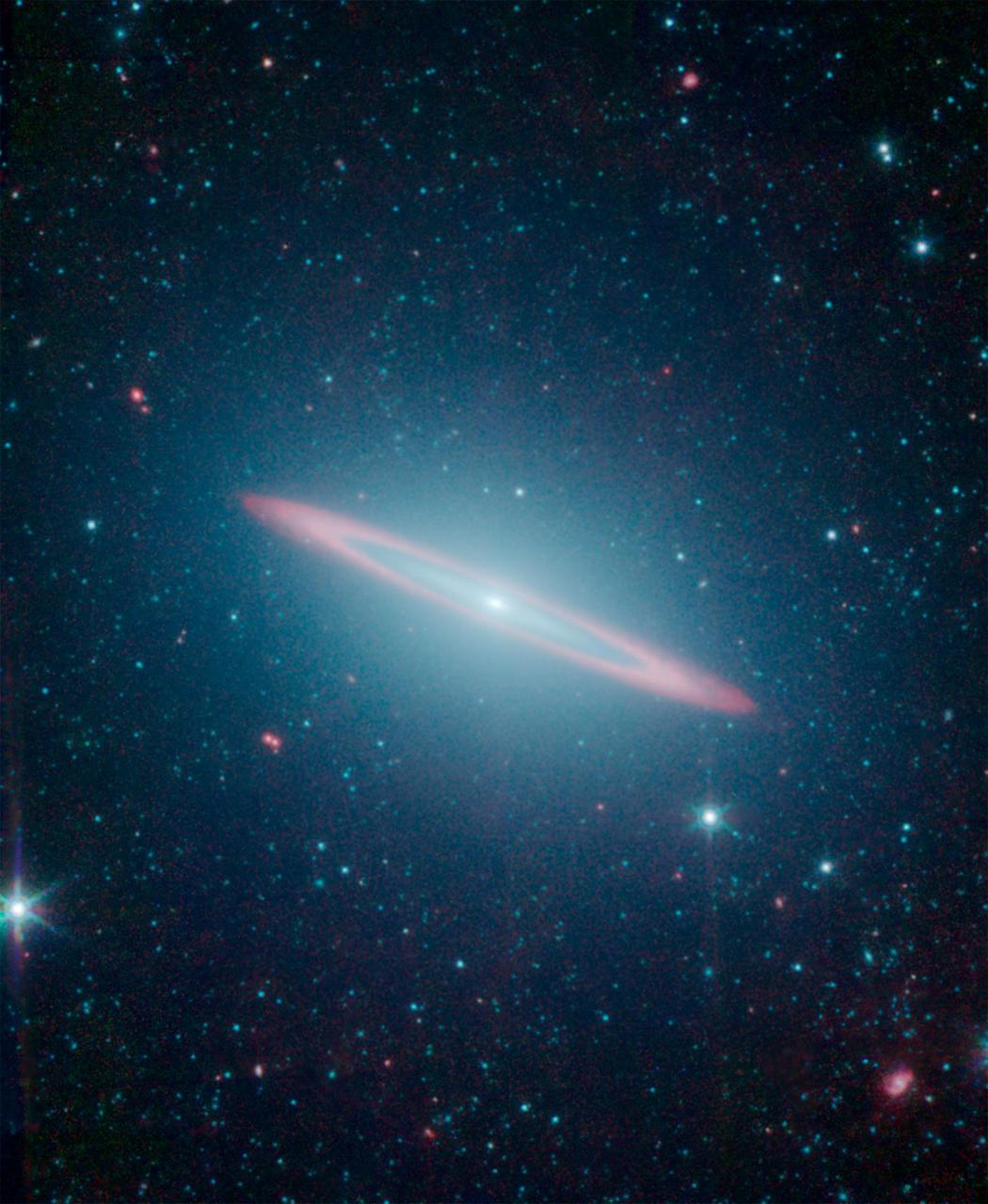
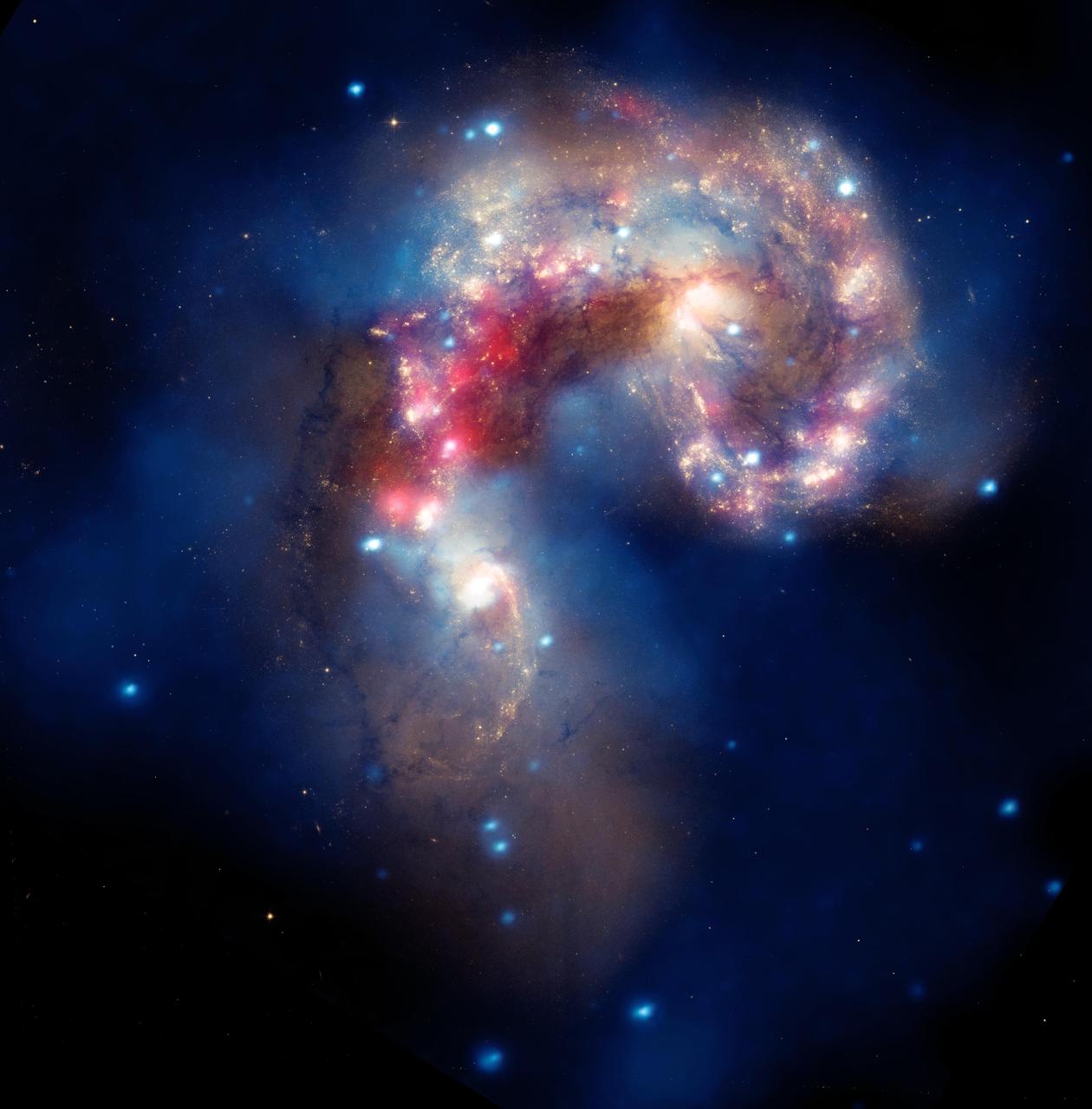
The claim A century ago astronomers argued in public over whether the "spiral nebulae" were inside the Milky Way. They are not — they're other galaxies, hundreds of billions of them, each a hundred billion suns give or take, colliding, merging and evolving on billion-year clocks.
The Milky Way, from inside
A barred spiral roughly 100,000 light-years across, holding on the order of 100–400 billion stars, with Sagittarius A* anchoring the centre and our Sun orbiting once every ~230 million years, two-thirds of the way out. We've never seen it from outside — every "photo of the Milky Way" is either the band across our sky or another galaxy standing in.
Andromeda is coming
M31 is approaching at ~110 km/s, and for years the standard line was a merger in about 4.5 billion years. Honest update: a 2025 analysis in Nature Astronomy, folding in the tug of satellite galaxies, put the odds of a merger within 10 billion years at roughly a coin flip. Either way — no star-on-star collisions. Galaxies are mostly empty space passing through empty space.



Lensing, in one sentence Mass bends light, so a foreground cluster acts as a natural telescope — smearing background galaxies into arcs — and the shape of the distortion reveals where the invisible mass sits. It's how the Webb cluster above maps dark matter without ever seeing it.
The universe, entire
Cosmology asks the biggest possible questions with the plainest possible data: one baby picture, one expansion rate, one energy budget. Here are all three — including the part where the numbers disagree.

The budget of everything
That gold sliver is everything ever photographed on this page — every star, planet, nebula and person. The other 95% of the universe's energy content is detected only by its gravity or by the acceleration it drives. Figures from the Planck mission's fit of the CMB.
The open argument: Hubble tension
Why it matters. The two methods should agree, and stubbornly don't — the gap has survived a decade of error-hunting. It may be a subtle systematic. It may be the first crack in the standard model of cosmology. This is what a live scientific controversy looks like, mid-argument. (The Cepheid rung of that ladder was built by Henrietta Leavitt — section 24.)
Five worlds in four dimensions
Real spacecraft-derived maps wrapped onto spinning globes — three dimensions of shape plus the fourth, time, as each world turns at its true axial tilt. Saturn wears its rings; Uranus rolls by on its side, exactly as it really does. Drag any globe to explore.